Azores Airport Information and Pictures
Azores Airport information for each of the nine airports in the Azores.
This first picture is of Sao Miguel island with Ponta Delgada Azores airport in the foreground.
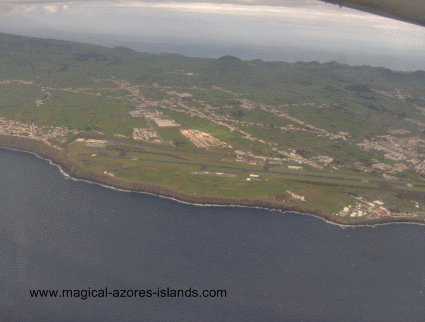
There are two airports in the Azores that are equipped to handle international flights:
- Lajes Field Azores on Terceira
- Ponta Delgada Airport (Joao Paulo Airport in Sao Miguel)
Most of the international flights go to and from Joao Paul Airport in Ponta Delgada.
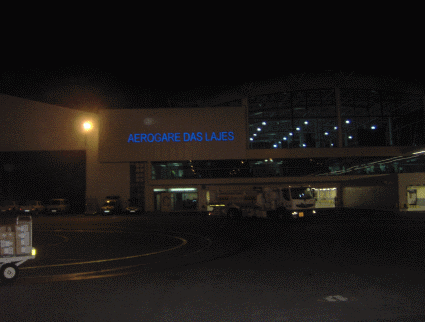
Lajes Field Terceira (TER)
Lajes Field Airport (TER) is the main air gateway to the island of Terceira and serves as a connecting hub to other islands.
Situated near the historic city of Angra do Heroísmo, the airport operates as both a civilian airport and a military installation, reflecting its long-standing strategic importance in transatlantic aviation. Regular flights link Terceira with mainland Portugal and other islands in the Azores, making it a convenient hub for travelers exploring the central group of islands.
Although it plays an important international role, Lajes Field is relatively small and straightforward to navigate, allowing visitors to arrive and begin discovering the gorgeous scenery, charming towns, and coastal landscapes without delay.
Ponta Delgada Airport (Joao Paulo Airport in Sao Miguel) (PDL)
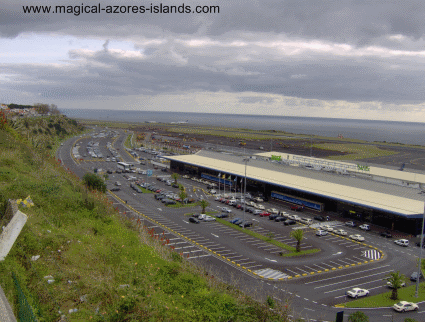
Most international flights land in Ponta Delgada. The airport is a couple of kilometers outside of the city of Ponta Delgada and is close to the waters edge.
Faial - Horta airport (HOR)
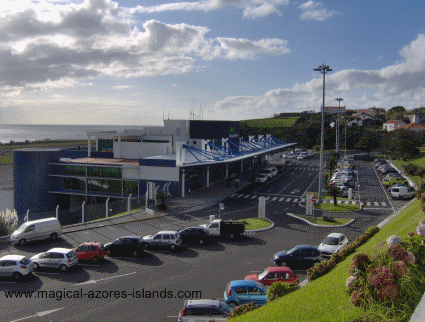
Horta Airport (HOR) serves the island of Faial and is located just outside the town of Horta on the island’s eastern coast.
Today the airport handles a steady number of inter-island flights, partly because Horta is an administrative centre where the Azores’ regional government sits.
Faial also holds an important place in aviation history. In 1919, the U.S. Navy Curtiss seaplane NC-4, commanded by Albert C. Read, landed in Horta Bay during the first successful transatlantic flight from Newfoundland to Portugal. The aircraft remained in Horta for several days, marking the island as one of the earliest stopping points in Atlantic aviation.
Today, travelers arriving at Horta Airport can quickly reach the harbor town of Horta, famous for its colorful marina murals and views of nearby Pico Island.
Santa Maria Airport (SMA)
Santa Maria Airport (SMA) is located on the island of Santa Maria, the southeasternmost island of the Azores archipelago. Opened in the 1940s with investment from the United States, the airport played a key role in early transatlantic aviation, serving as an important stop for aircraft crossing the Atlantic Ocean. Today it provides regular connections to other Azorean islands and to mainland Portugal, making it the primary gateway for visitors arriving on Santa Maria.
The airport is small and easy to navigate, offering travelers an easy arrival point before exploring the island’s sandy beaches and quiet coastal villages.
Pico Airport (PIX)
Pico Airport (PIX) serves the island of Pico and is located on the northern coast near the town of Madalena. The airport provides regular flights to mainland Portugal and to several other islands in the Azores, making it convenient to the central island group of islands. It is small and easy to navigate.
From the airport, visitors can quickly reach Pico’s vineyards, coastal villages, hiking trails and the marina, which features ferry service to Faial and other islands.
Graciosa Airport (GRW)
Graciosa Island is in the Central group (with Pico, Sao Jorge, Terceira, and Faial).
Graciosa Airport (GRW) serves the quiet island of Graciosa and is located just a couple kilometers outside the town of Santa Cruz da Graciosa. The airport provides regular regional flights helping residents and visitors travel easily within the archipelago.
Like many airports in the Azores, it is small and easy to navigate. From the airport it is only a short drive to the island’s main villages, windmills, and the famous Furna do Enxofre volcanic cave, making it a convenient starting point for exploring one of the Azores’ most peaceful islands.
Sao Jorge Airport (SJZ)
São Jorge Airport (SJZ) serves the long, narrow island of São Jorge and is located near the town of Velas along the island’s northern coast. As is characteristic of many populated areas of Sao Jorge, the airport is located at a low, seaside elevation, creating one of the more memorable arrivals in the Azores.
This smaller airport provides regular regional flights connecting São Jorge with several other islands in the Azores, helping the island stay connected within the central group.
From the airport, visitors can quickly reach Velas and begin exploring São Jorge’s famous fajãs, flat coastal plains formed by lava flows and landslides, as well as its scenic hiking trails and villages famous for their cheese production.
Flores Airport (FLW)
Flores Airport (FLW) is located near the town of Santa Cruz das Flores and serves this remote island in the western Azores. The airport offers regular regional flights connecting Flores with other islands in the archipelago.
Small and easy to navigate, it provides a convenient entry point to one of the Azores’ most scenic islands, known for waterfalls, crater lakes, and coastal cliffs.
Corvo Airport
Corvo is the smallest of the Azores islands (with about 400 residents) and has a very small airport as well.
Find more information to help in planning to visit the Azores
www.magical-azores-islands.com (click here to go home and leave this page on the Azores Airport)
 Subscribe To Magical Azores Islands

